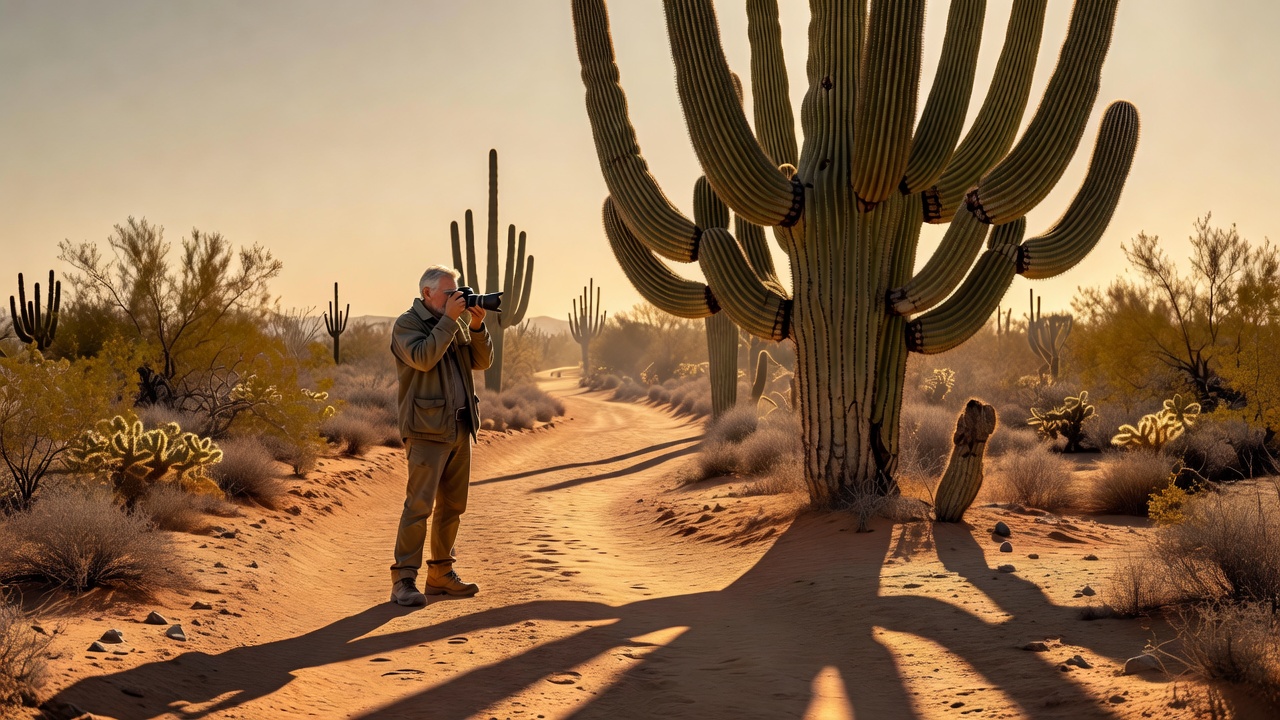
See an individual, not an emblem
It is easy to photograph the idea of a cactus: upright, prickly, immediately recognizable. A more lasting picture begins when you notice what makes this particular plant different. One arm may lean toward a clearing. An older stem may carry a dark seam. A young plant may be almost hidden by the shelter around it. Look for a relationship between those details rather than collecting every visible spine. From across a room, the gesture will usually arrive before the texture.
Let the background do less
Walk only where access is permitted, and compare several safe viewpoints before unpacking. A branch that disappears into a rocky slope may read clearly against a distant, evenly lit hillside. Moving a short distance can change that relationship more effectively than opening the aperture. Check all four frame edges for bright stones, clipped branches and accidental overlaps. A clean background does not need to be featureless; it needs to support the subject without making the viewer continually choose between competing shapes.
Choose light for the character you want
Low side light gives ribs and spines a tactile quality. Backlight can produce a luminous outline, although bright edges are easily lost if exposure is too generous. Soft overcast light is useful when color and surface matter more than dramatic shadow. Make a test exposure and inspect both the histogram and highlight warnings. These displays describe the camera preview rather than every recoverable detail in a raw file, so leave a sensible margin instead of assuming editing will rescue everything.
Build depth deliberately
A wide aperture can isolate a single pad or stem, but it may also leave important parts of the plant unexpectedly soft. If the portrait depends on the whole branching form, stop down enough to hold the necessary depth and check the result at magnification. Wind can move flowers and slender stems even when the trunk appears still. Raise shutter speed when needed rather than treating a tripod as a solution to subject movement. There is no one setting that suits every cactus portrait.
Understand the place without making claims
The Sonoran Desert is associated with saguaros, while the Chihuahuan Desert includes many different cactus communities. Saguaro National Park and Organ Pipe Cactus National Monument offer distinctive settings, but their current access rules and seasonal conditions should be checked before travel. Joshua Tree National Park belongs to a different visual conversation: Joshua trees are yuccas, not cacti. Accurate captions make a photograph more interesting. If you cannot confidently identify a species, describe the visible form and location instead of guessing.
Work without disturbing the subject
Never touch, reposition, cut or remove a plant to improve a picture. Spines can injure people, and some fine glochids are difficult to see or remove. Keep equipment, clothing and bags clear of vegetation. Stay on designated routes where required, and do not step onto fragile soil to obtain a cleaner angle. Follow local wildlife guidance and give animals space. If a composition depends on unsafe footing or entering a closed area, leave it unmade. Restraint is a photographic decision too.
Make a portrait that belongs indoors
Return to the room before finalizing the crop. A tall portrait may echo a doorway or bring vertical rhythm beside a low cabinet. A closely cropped cluster may feel denser and work better as a small accent than as the largest object on the wall. Compare a version with generous breathing space against a tighter one at the same display size. Watch for a bright sky strip that becomes more insistent indoors than it seemed on a luminous screen.
Edit as a small, coherent series
For a pair or trio, look for kinship rather than repetition. Similar light direction, background brightness or camera distance can connect distinct plants. Avoid forcing every file into the same aggressive color treatment; warm natural variation can be part of the story. Make a modest test print before committing to the final size, especially when fine spines are essential to the image. Then view it from where people actually sit. A cactus portrait should offer something at that distance, not only under close inspection.